Weave Points
Creative Catharsis as Pain Reliever

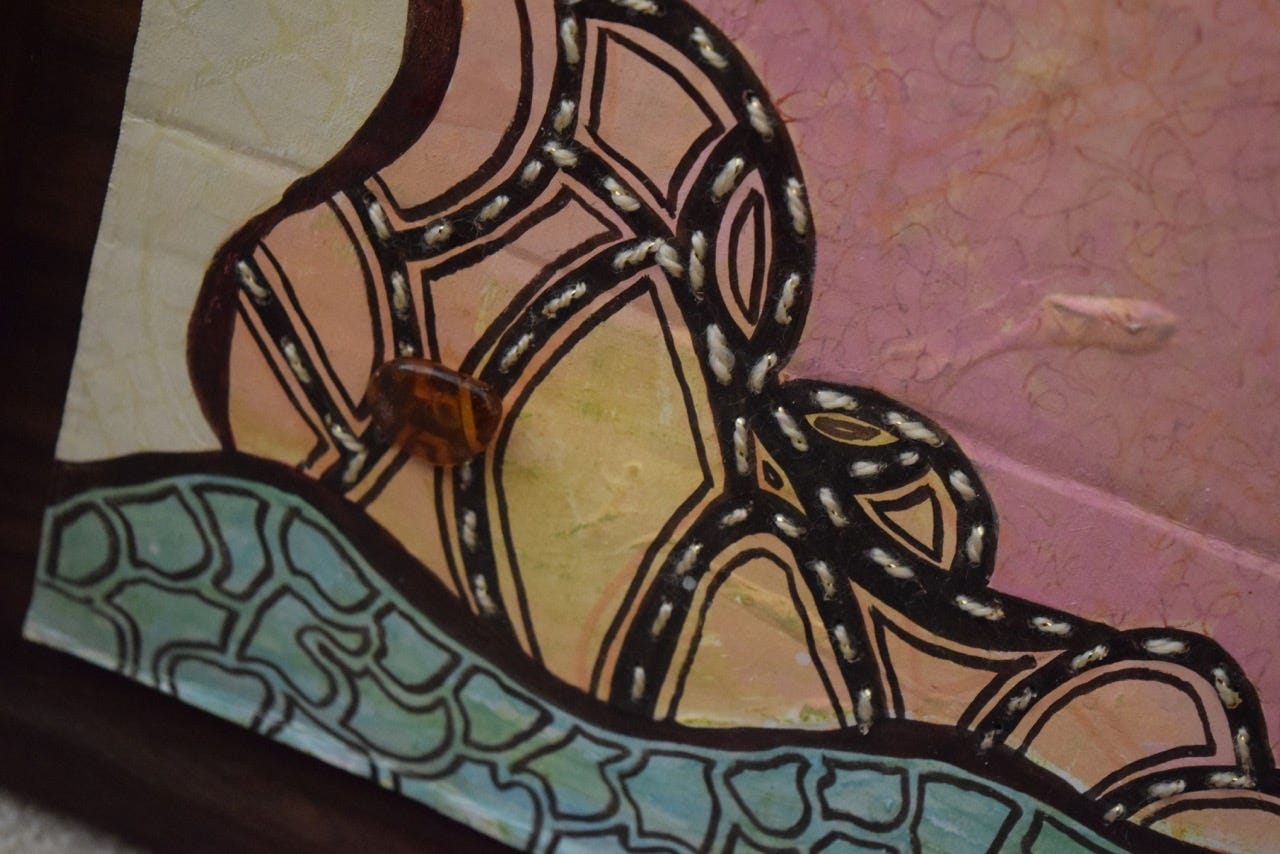
That morning in my studio, a veil lifted from my mind. As I glued the final pieces of cardboard onto handmade frames and tied a last thread through the wood, a visceral relief washed over me. Shafts of light streamed through the blinds, glancing across my skin and illuminating dust motes above my desk. Along with the completion of my artwork Weave Points, I knew a year’s worth of grief had also reached its end.
Before I was even aware of it, I had been processing pain through the act of creation. Ten years ago, when I reviewed my portfolio spanning four decades, a clear portrait emerged. In my first twenty years, I drew busts of young women—faces on shoulders, but without arms. These appendage-less girls were autobiographical, silent witnesses to the childhood sexual abuse I endured. I was unarmed, immobilized in the world by the weight of trauma.
In my twenties, as therapy helped me understand what had happened and how it shaped me, my figures grew scars. In my thirties, as I began to glimpse light at the end of the tunnel, those women transformed into angels—draped in long dresses, luminous, winged. Through these images, I was learning intimacy, healing sexuality, and embracing relationships where I could finally share inherent light. Looking back, I realized this body of work chronicled my catharsis. Creation had been my survival mechanism, compelling me to confront pain rather than be derailed by it.
That realization drove me to study pain itself. In my research, two stories stood out.
A therapist once told me to imagine standing in a bright hallway full of closed doors. Behind one, the sound of a vicious dog shakes you with terror. Though every instinct says to avoid it, you force yourself to open the door. The room is dark, the growling still terrifying—until you flick on the light. There, in the corner, is not a beast but a tiny shih tzu puppy, its bark ten times larger than its bite. By facing the fear and illuminating it, its power vanishes.
Another study revealed the same truth through physical experience. Participants were asked to plunge their hands into buckets of ice water until the pain became unbearable. One group looked away; another was told to watch their submerged hands. Those who faced their pain directly—visually acknowledging it—endured significantly longer.
Why does this work? I believe it mirrors the cycles of breath. We inhale and exhale in an unconscious rhythm that sustains life. But when we hold our breath, the interruption quickly becomes unbearable until we gasp for air. Pain works the same way. When we repress it, we freeze within it, breeding dis-ease. Allowing pain to flow through us is far less damaging than trying to contain it.
So, I turned even more deliberately to art as my facilitator for moving through pain. No longer interested in figurative portraits of women as symbolic reflections, I wanted to engage the pain in real time—manually, viscerally. Textures, colors, and materials became my archaeological tools, excavating emotion from within.
The turning point came the year after my mother died. Our relationship had been the most complicated of my life—intense, often distressing, defined by her refusal to acknowledge pain. Cancer consumed her so quickly that my siblings and I were thrust to her deathbed with only weeks to gather, reckon, and say goodbye. After her passing, I descended into twelve months of cavernous grief.
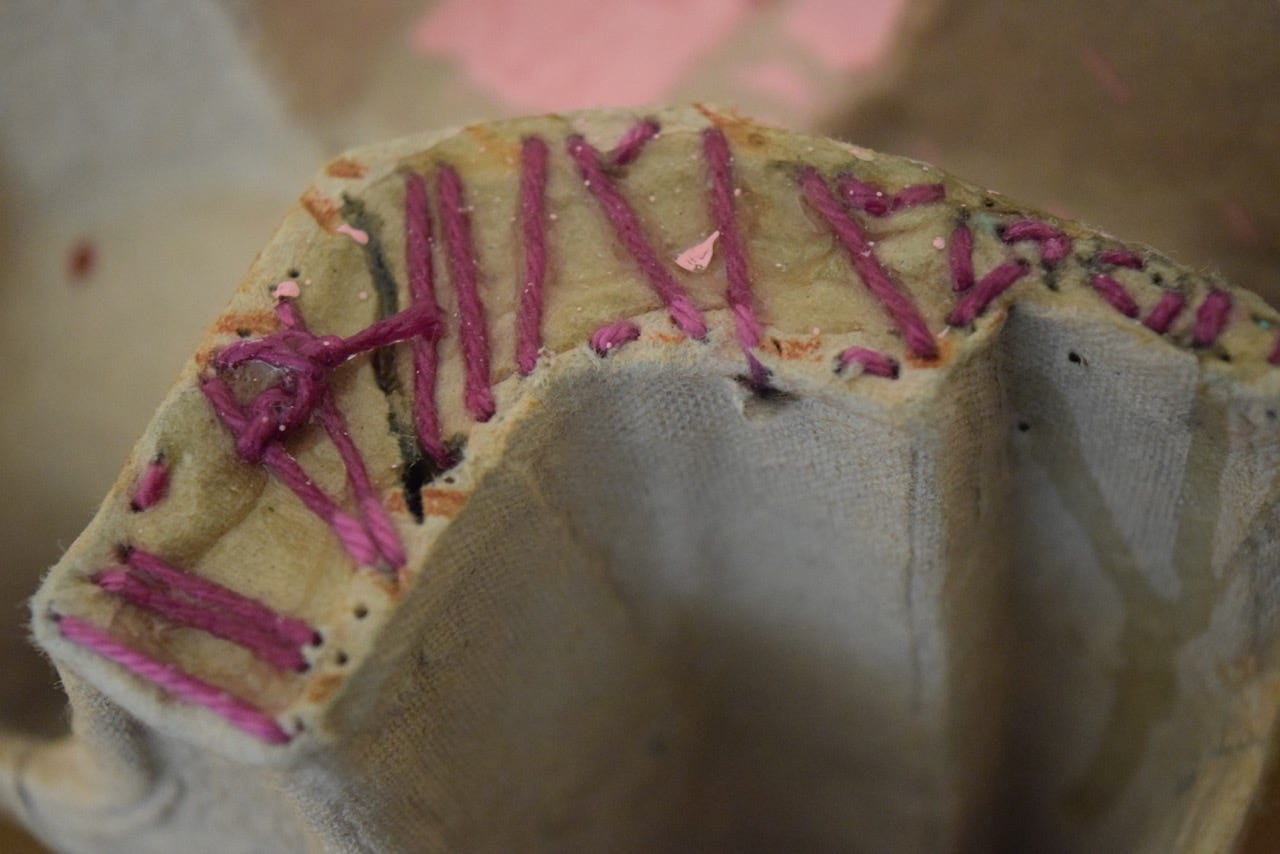
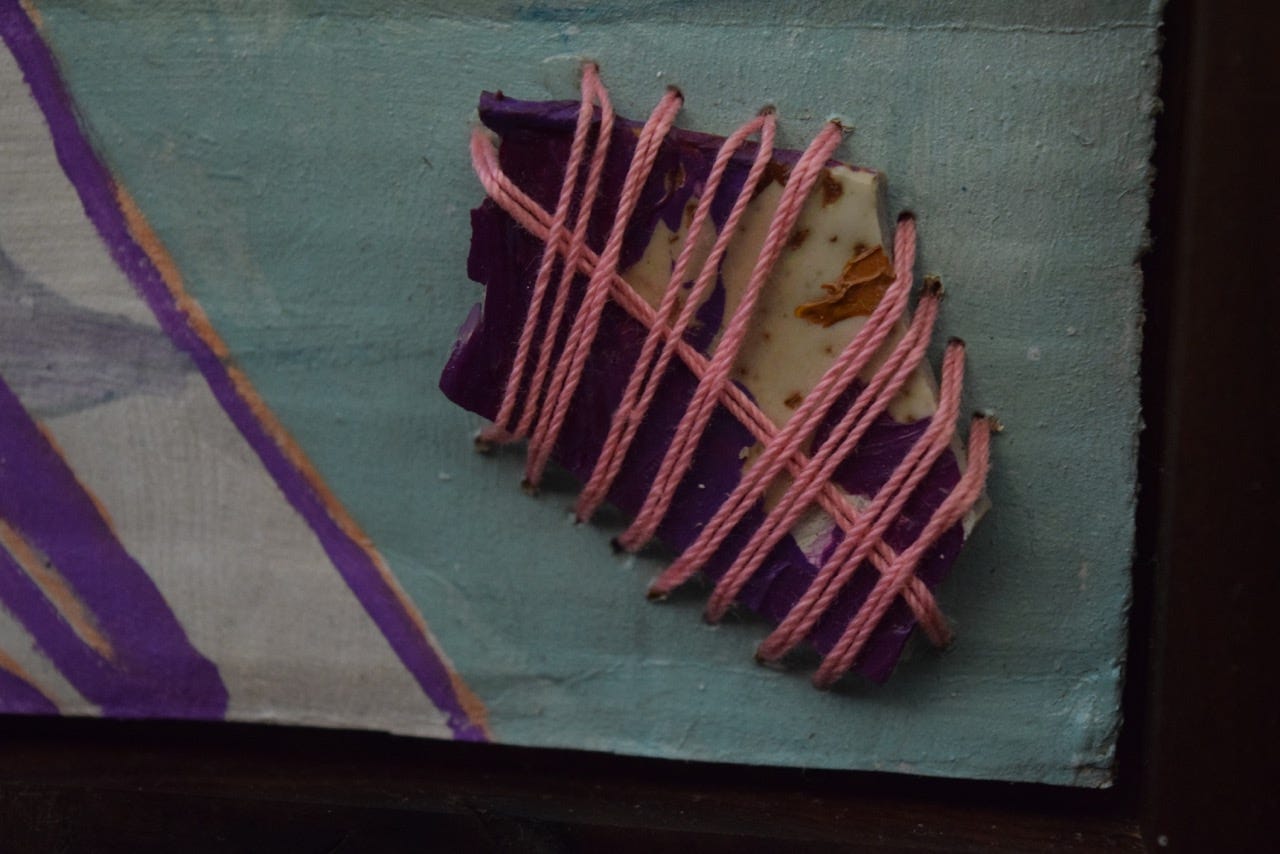
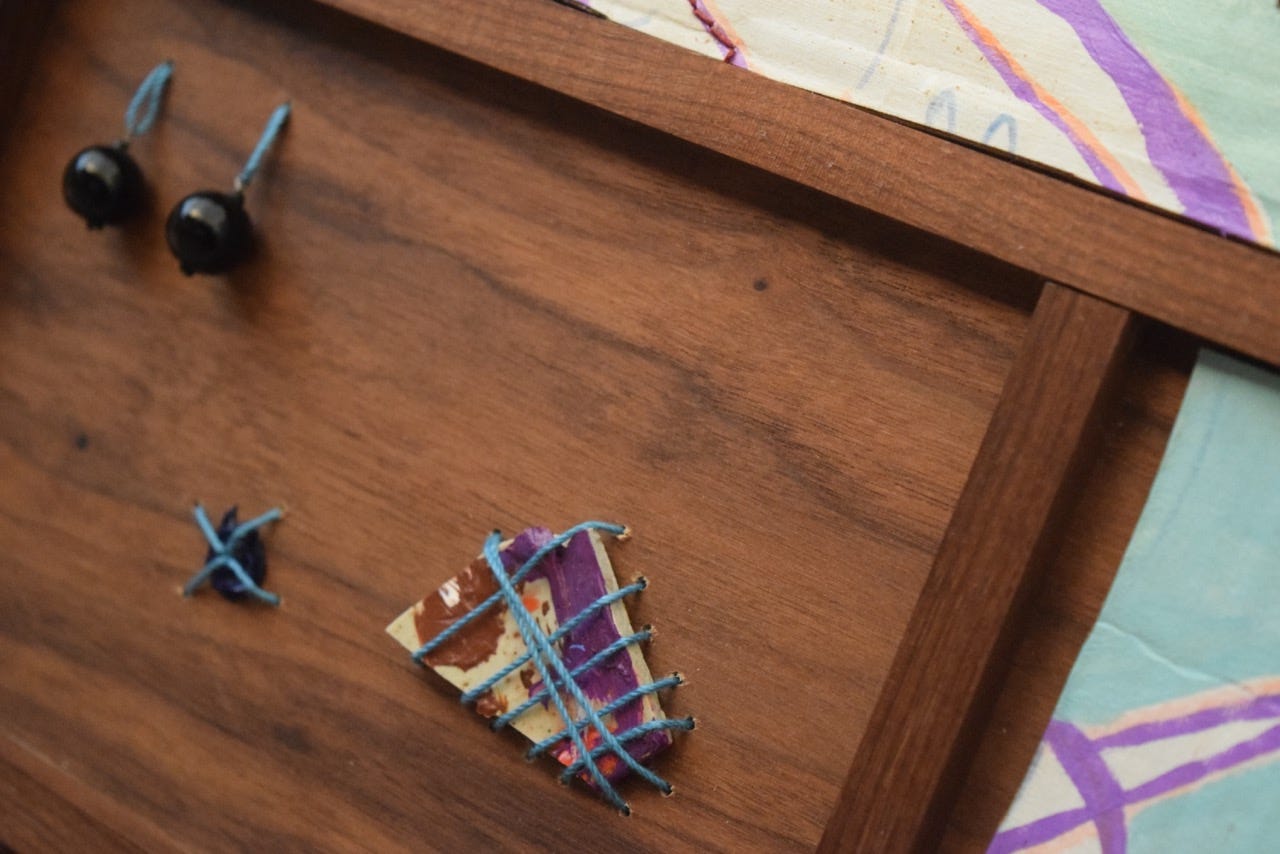
Weave Points became my survival ritual. Three wooden frames, built by my life partner, became vessels for that grief.
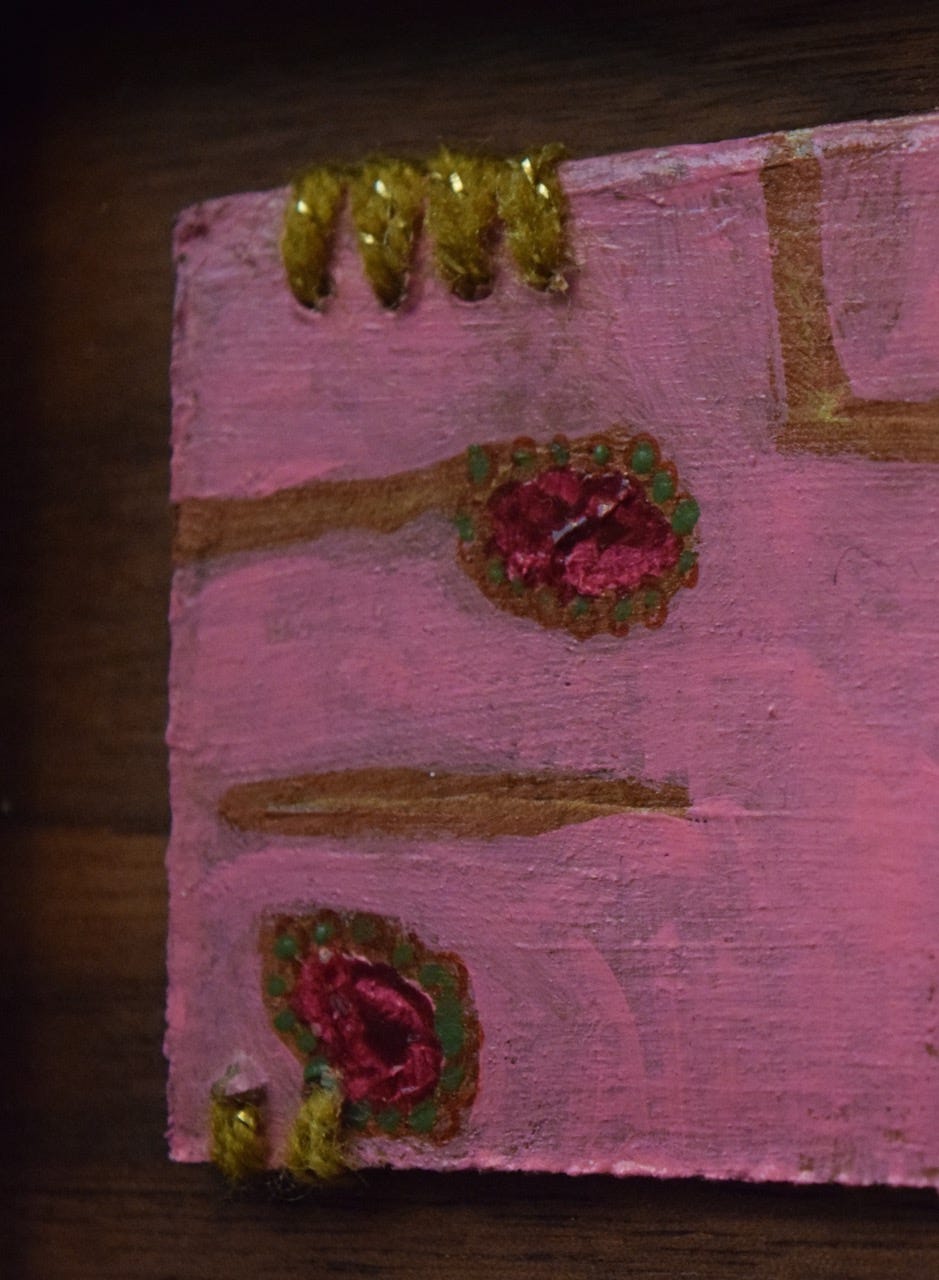
The first frame, “Elation,” unearthed moments of joy with my mother: tender nights of laughter, effervescent companionship, memories stitched in glistening golden yarn over squares of pink. It captured the delight of time dissolving into love and camaraderie.
The second, “Explosion,” gave voice to rage. Harsh arguments, painful words, irreconcilable wounds surfaced in jagged strokes of purple and moody blue, punctuated by angry dashes of red string. Driving a needle through fabric—fingers sore beneath a cheap thimble—released some of that fury.
The third, “Expansion,” took the longest. After the first two works incubated my grief, I needed months of steeping silence before continuing. Finally ready, I painted voluptuous peach waves, layered whites upon whites, and stitched pure thread along the edges. It embodied peace, clarity, and the arrival of growth back into my body.
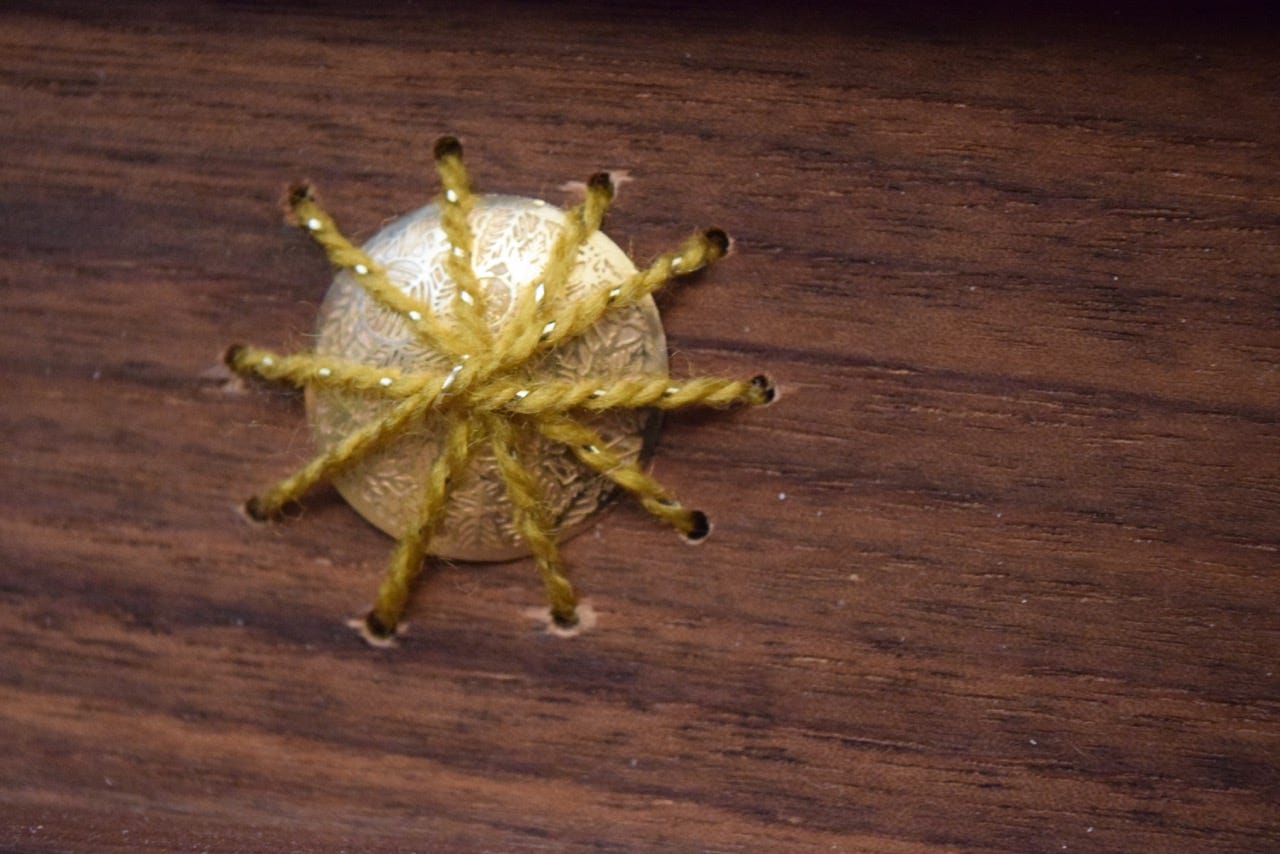
The morning I realized that Weave Points was complete, I knew my grief had transmuted. The suite represented not just my relationship with my mother, but the very cycle of human connection: elation, explosion, expansion. Through art, I had digested and released pain. More than that, I had discovered a method I will continue to carry forward.
Art is now one of my essential modes of healing. For me, pain can indeed be a paintbrush.
A very interesting approach to catharsis. Visual art is not really accessible to me, but music, especially when I play it, has always been my go-to for relief and closure.
I love everything about this Kimberly.